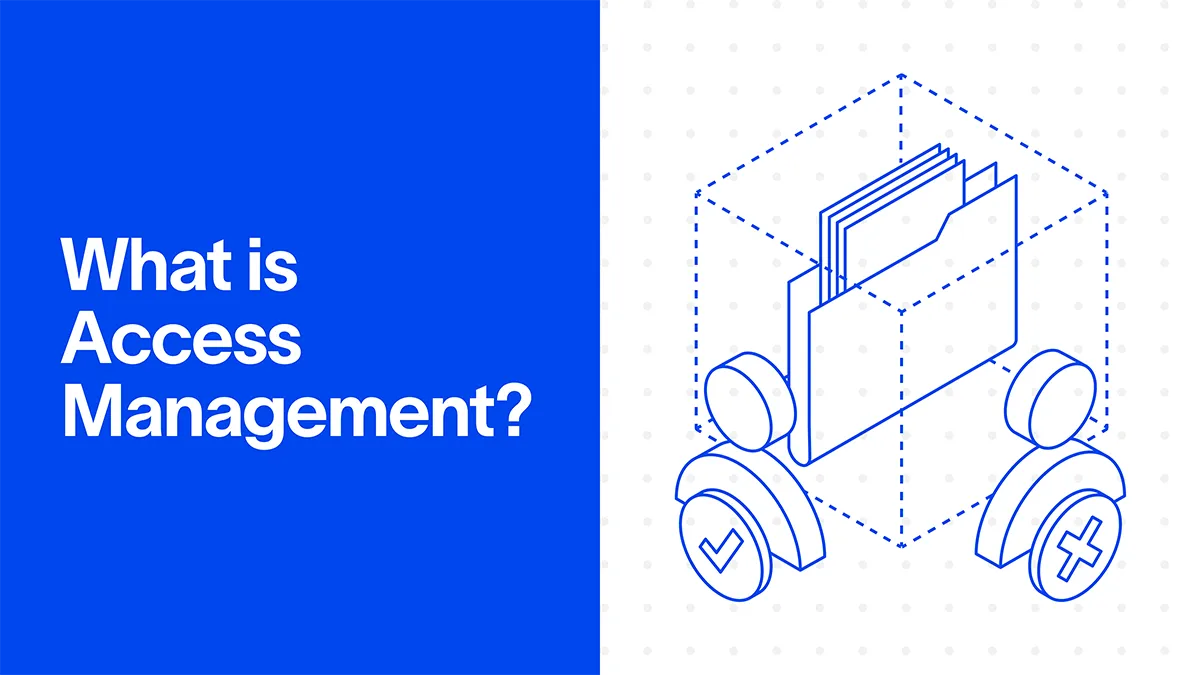
- Access management is the set of policies and controls that determine who can access which systems, applications, and data inside an organization.
- Poor access management is one of the most common root causes of both insider-driven data exposure and external breaches.
- Access management overlaps with, but is distinct from, identity and access management (IAM) and privileged access management (PAM); understanding the differences matters for building the right controls.
- For data security teams, access management is a foundational layer: without knowing who has access to sensitive data, neither DLP nor DSPM can operate at full effectiveness.
What Is Access Management?
Access management is the practice of defining, enforcing, and auditing who can access what within an organization's systems, applications, and data, and under what conditions that access is granted or revoked.
Why Access Management Matters
Misconfigured or overly permissive access is a leading factor in data breaches. When employees, contractors, or third parties hold more access than their role requires, sensitive data becomes exposed to insider risk, accidental leakage, and external exploitation. The challenge has grown significantly as workforces have moved to distributed environments, cloud infrastructure, and SaaS-heavy tool stacks. In that context, access management is no longer just an IT function, instead it now sits at the center of how organizations protect their most critical data.
How Access Management Works
At its core, access management answers three questions: Who is this user? What are they allowed to do? Is this request consistent with their role and the current context? The mechanisms that answer those questions vary, but the underlying logic is consistent across environments.
- Authentication confirms that a user is who they claim to be, typically through passwords, multi-factor authentication (MFA), or single sign-on (SSO).
- Authorization determines what an authenticated user is permitted to access, based on role, group membership, or attribute-based policies.
- Access provisioning is the process of granting access when an employee joins, changes roles, or requires temporary elevation.
- Access reviews and deprovisioning are the ongoing audits and removals that ensure access doesn't accumulate over time (often called "access creep").
- Policy enforcement applies rules consistently across systems, often through an access management platform or identity provider that serves as a central control point.
Access Management Technologies
Organizations typically build their access management capabilities across several technology categories:
- Single sign-on (SSO): Centralizes authentication across applications so users authenticate once and gain access to multiple systems.
- Multi-factor authentication (MFA): Requires additional verification beyond a password, significantly reducing credential-based attack success.
- Role-based access control (RBAC): Assigns permissions based on job function rather than individual configuration, making access easier to audit and manage at scale.
- Attribute-based access control (ABAC): Extends RBAC with additional context, such as device health, location, or time of access, to apply more granular policies.
- Identity governance and administration (IGA): Automates access reviews, certifications, and lifecycle management to reduce manual overhead.
- Zero trust access frameworks: Apply continuous verification rather than a trust-once-and-done model, requiring re-authentication or contextual checks throughout a session.
Access Management Examples
Example 1: Role-based access in a financial services firm
A financial analyst joins a firm and is granted read access to certain reporting dashboards. Six months later, they move into a portfolio management role. Under a well-managed access control framework, their permissions are updated to reflect new responsibilities and the analyst-level access is revoked. In practice, organizations often skip the revocation step, leaving former permissions in place and expanding the blast radius if her account is ever compromised.
Example 2: Third-party vendor access and data exposure
A healthcare organization grants a software vendor temporary access to its internal systems for an integration project. The project concludes, but the vendor's access credentials are never deprovisioned. Months later, sensitive patient data is exfiltrated through that dormant access path. This is one of the most common and preventable failure modes in enterprise security, and it's a direct access management gap.
Access Management vs. Identity and Access Management (IAM)
These two terms are often used interchangeably, but they describe different scopes.
Identity and access management (IAM) is the broader discipline. It encompasses the full lifecycle of digital identities, including how they're created, verified, maintained, and eventually removed. IAM includes technologies like identity governance, directory services, and federated identity systems.
Access management is a component within IAM. It focuses specifically on the enforcement layer: authentication, authorization, and session management at the point of access. Think of IAM as the strategy and governance framework, and access management as the operational mechanism that puts it into practice.
In most enterprise environments, an IAM program defines the policies, while access management systems enforce them. The distinction matters when evaluating tools: a pure access management solution might handle SSO and MFA, while a full IAM platform also addresses lifecycle management, identity governance, and compliance reporting.
| Access Management | Identity and Access Management (IAM) | |
|---|---|---|
| Scope | Authentication and authorization enforcement | Full identity lifecycle management |
| Focus | Who gets in and what they can do | How identities are created, managed, and retired |
| Examples | SSO, MFA, session control | Identity governance, directory services, IAM platforms |
| Governance role | Operational enforcement | Strategic policy and compliance |
Access Management vs. Privileged Access Management (PAM)
Privileged access management (PAM) is a specialized subset of access management focused on high-risk accounts with elevated permissions such as system administrators, database operators, service accounts, and executives with broad data access.
Standard access management applies to the general workforce. PAM applies to the accounts that, if compromised or abused, could cause the most damage. PAM solutions typically add controls like session recording, just-in-time access provisioning, credential vaulting, and real-time alerting on unusual privileged activity.
For data security teams, the PAM population deserves heightened attention. A privileged user with broad access to file stores, databases, or cloud storage environments can exfiltrate large volumes of sensitive data with minimal friction. That's why DSPM and DLP controls should be calibrated to flag unusual activity from privileged accounts specifically, not just general workforce behavior.
| Access Management | Privileged Access Management (PAM) | |
|---|---|---|
| Target users | All employees and external users | Admins, executives, service accounts |
| Risk level | Broad, distributed | Concentrated, high-impact |
| Key controls | MFA, RBAC, access reviews | JIT access, session recording, credential vaulting |
| Data security relevance | Sets the baseline for data access scope | Protects highest-risk pathways to sensitive data |
Access Management Failure Risks
The most consequential access management failures tend to fall into a few recurring patterns:
- Access creep: Permissions accumulate over time as employees change roles. Without regular reviews, users end up with access far beyond what their current job requires.
- Over-provisioning at onboarding: New employees are granted broad access for convenience, often based on what a previous role-holder had rather than what the new hire actually needs.
- Orphaned accounts: Former employees or contractors whose accounts were never deprovisioned remain active, creating persistent attack surfaces.
- Third-party access sprawl: Vendors, partners, and contractors receive access that is rarely audited and often outlasts the engagement.
- Shared credentials: Service accounts and administrative credentials shared across teams make it nearly impossible to attribute actions to specific individuals during an investigation.
From a data security perspective, each of these risk patterns can translate directly into sensitive data exposure.
Access Management and the AI Era
As AI tools become standard in the enterprise, access management takes on new urgency. Employees are moving sensitive data into AI platforms, cloud storage, and collaboration tools at a pace that most security controls were not designed to track. The question of who has access to what now extends to which AI models can query which data sources, which service accounts power agentic workflows, and whether those access pathways were ever intentionally scoped.
Organizations that treat access management as a solved problem or as a checkbox from a compliance audit tend to be the ones that discover unexpected data exposure during a DSPM scan or a DLP investigation. Getting access management right is not a one-time implementation. It is an ongoing operational discipline, and it sits at the foundation of everything else in a modern data security program.
Access Management and Data Security: The Connection
Access management is often framed as a network security or identity concern, but it is equally foundational to data security. Data security posture management (DSPM) tools map where sensitive data lives and who has access to it, which is only meaningful if access management controls are working as intended. If permissions are overly broad or misconfigured, DSPM surfaces that exposure directly.
Similarly, data loss prevention (DLP) operates at the point where data moves: out of a system, into an email, across a USB drive, or into an AI tool. Access management determines whether users should have been able to reach that data at all. When DLP and access management are aligned, security teams can distinguish between a legitimate user who accidentally sent the wrong file and an over-privileged account moving data it never should have touched.
For insider risk management (IRM), access management is the upstream context. Knowing what a user was permitted to do, relative to what they actually did, is what makes behavior-based risk scoring meaningful rather than arbitrary.
Frequently Asked Questions
What is access management in cybersecurity?
Access management in cybersecurity is the set of processes, policies, and technologies that control who can access an organization's systems, applications, and data. It includes authentication (verifying identity), authorization (defining permitted actions), and ongoing governance to ensure access stays aligned with business roles and risk policies.
What is the difference between access management and identity and access management (IAM)?
Identity and access management (IAM) is the broader discipline covering the full lifecycle of digital identities, from creation to retirement. Access management is a component of IAM focused specifically on authentication, authorization, and session control at the point of access. IAM sets the strategy; access management is the enforcement layer.
What is privileged access management (PAM) and how does it differ from general access management?
Privileged access management (PAM) focuses on high-risk accounts with elevated system permissions, such as administrators and service accounts. Standard access management applies policies across the general workforce. PAM adds specialized controls like credential vaulting, just-in-time access, and session recording to reduce the risk of privileged account abuse or compromise.
What are the most common access management risks?
The most common risks are access creep (permissions that accumulate over time), orphaned accounts from former employees or vendors, over-provisioning at onboarding, shared credentials that prevent attribution, and third-party access that is never audited or revoked after an engagement ends.
How does access management relate to data security?
Access management defines who can reach sensitive data. Data security posture management (DSPM) tools identify where that data lives and who has access to it. Data loss prevention (DLP) controls what happens when that data moves. When these disciplines are aligned, security teams can enforce least-privilege principles, detect anomalous behavior, and respond to data exposure incidents with full context.
What is user access management?
User access management refers to the processes and controls specifically governing end-user accounts, as distinct from system or service accounts. It includes provisioning access when users join, adjusting permissions when roles change, conducting regular access reviews, and deprovisioning access when employees or contractors leave.
What is data access management?
Data access management is the practice of controlling and auditing which users, systems, and processes can read, write, or move specific datasets. It applies access management principles directly to data repositories, cloud storage, databases, and file systems, and is closely related to DSPM, which assesses and monitors data access posture across an organization.

.avif)
.avif)