Secure AI Usage Across Human and Agentic Workflows
AI tools and AI agents introduce different risks and require different controls. Cyberhaven covers both, from the employee pasting sensitive data into ChatGPT to the autonomous agent quietly reading files across your enterprise.
Why AI Security Is Increasingly Difficult
AI adoption has outpaced the security controls built to govern it. The risks today aren't limited to employees sharing files in a chat window.
Agents Operate Where Your
Tools Can't See
Endpoint-based AI agents, local models, coding assistants, and MCP servers run directly on operating systems and developer environments. Browser-extension and network-layer security tools have no visibility there.
AI Workflows Move Data At Machine Speed
AI agents execute multi-step workflows autonomously, reading files, invoking tools, and moving data across systems before a single alert fires. A single misconfigured or compromised agent can exfiltrate data, hijack a workflow, or propagate across connected agents with no human in the loop.
Blocking Doesn't Work At AI Speed
Block-first controls generate alert fatigue, push shadow AI further underground, and create operational drag for the engineering and business teams that depend on AI tools to do their jobs. Governance that can't keep pace with AI adoption isn't governance.
How Cyberhaven Secures AI Usage
Cyberhaven covers the full surface area of AI risk, including the tools employees use, the agents running on endpoints, the MCP servers connecting agents to enterprise data, and the data itself as it moves through all of them.
.avif)
The security you need to reduce AI risks
Help your employees embrace AI safely while managing risks and ensuring compliance.
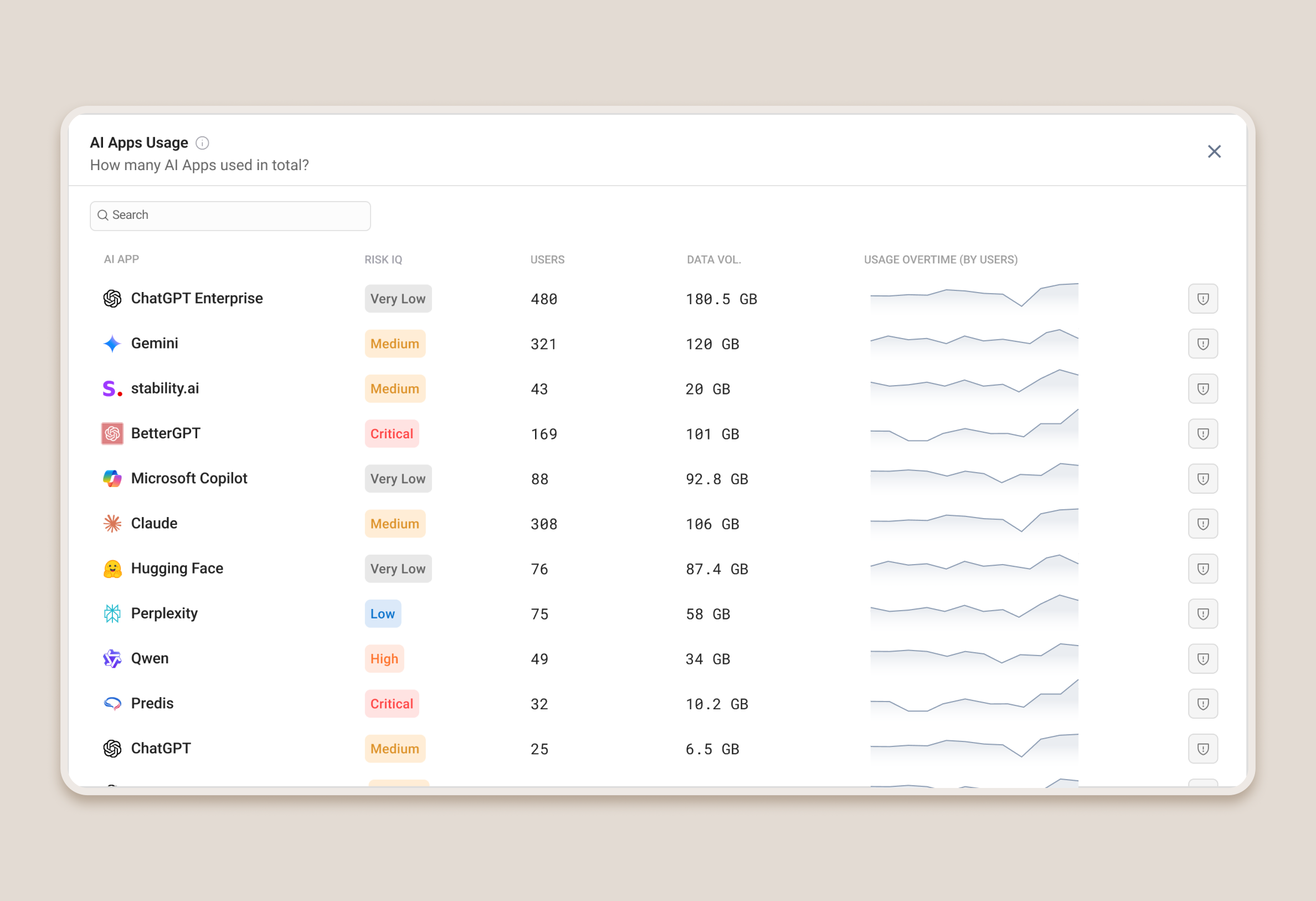
Shadow AI Discovery
Continuously inventories AI agents running across endpoints, browsers, CLIs, and IDEs, including tools that cloud-only security solutions cannot see.
Agentic AI Observability
Reconstructs the full execution lifecycle of every agent interaction, capturing tool calls, data access, and multi-turn conversation context in a single view.
MCP Server Monitoring
Discovers and monitors Model Context Protocol servers and AI connectors across the enterprise, surfacing risk from integrations that operate outside traditional security controls.
AI Risk IQ Scoring
Assigns risk scores across five dimensions to every AI application and agent in your environment. Cyberhaven maintains scores quarterly, with no customer configuration required.
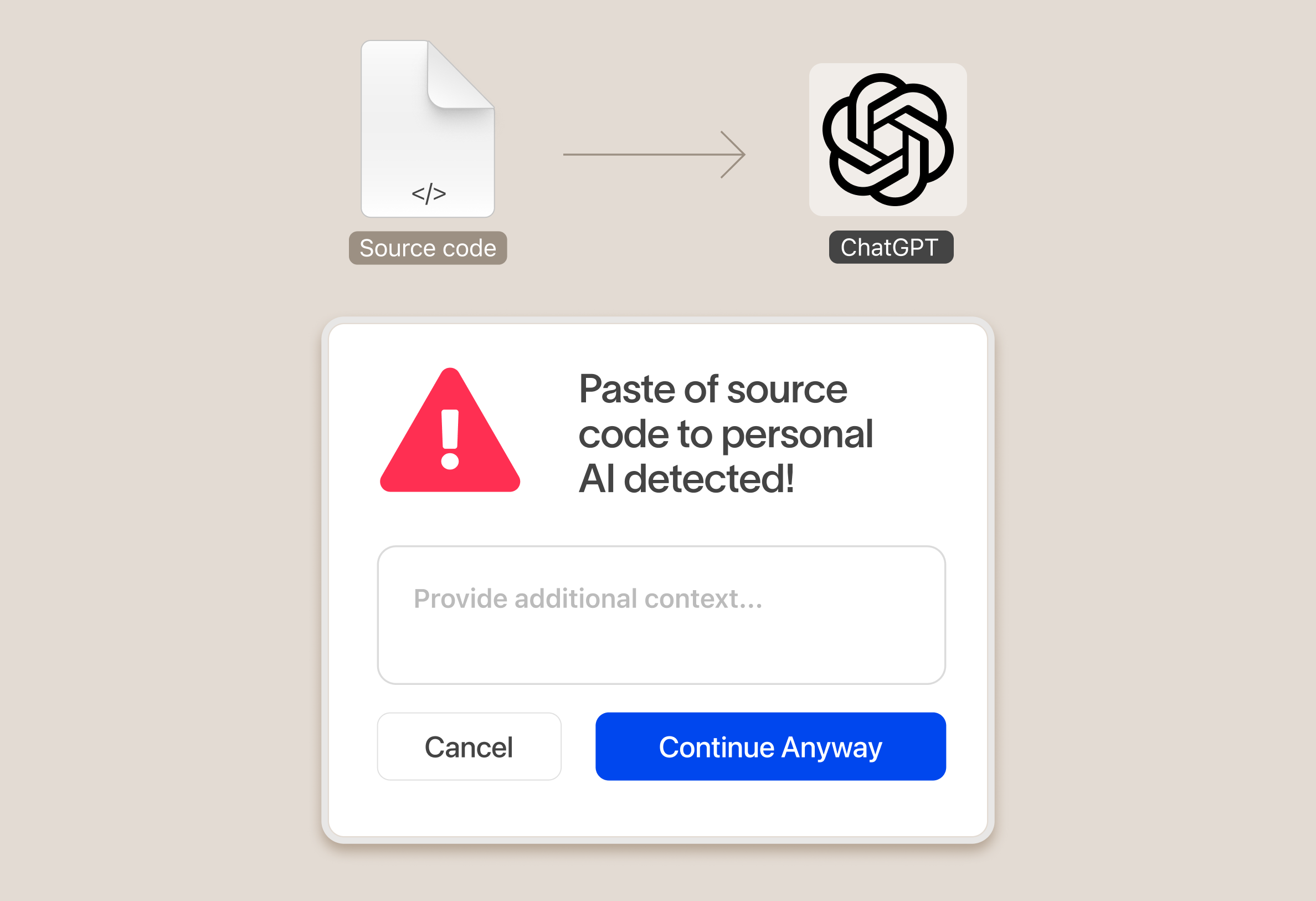
AI Data Flow Control
Enforces runtime guardrails at the prompt and response level, blocking high-risk data movement, redirecting users to sanctioned tools, and coaching employees with plain-English policy explanations.
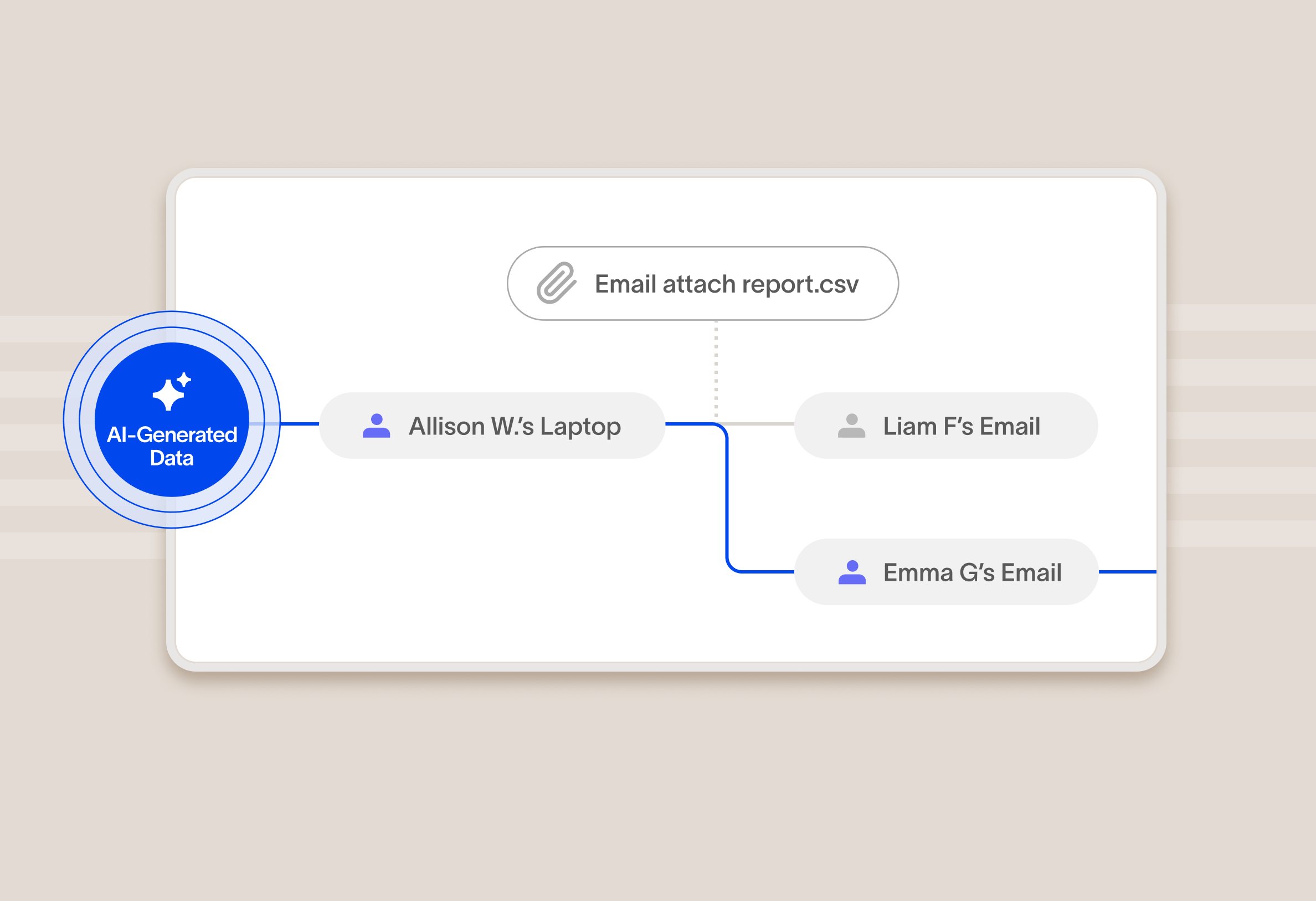
Data Lineage for AI Interactions
Connects every agent action to the data it touched, showing where that data originated and where it went next, so alerts become investigations.
Securing the Agentic Future
.jpg)
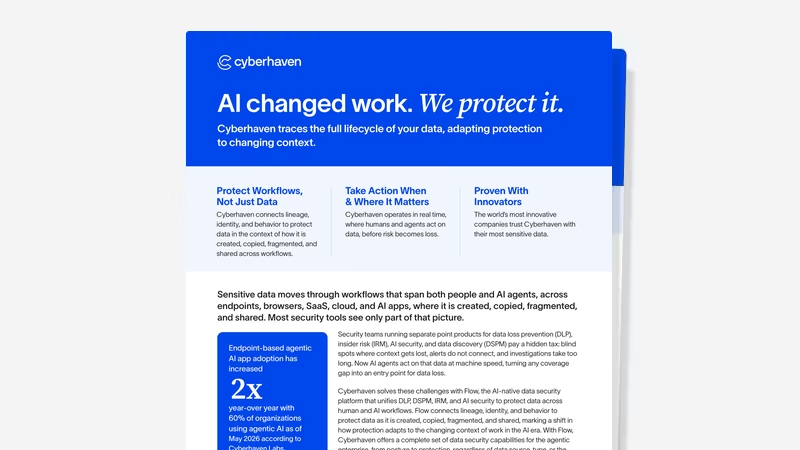
Data Security for the Agentic Enterprise
Cyberhaven Flow traces the full lifecycle of data and adapts protection to changing context
Frequently Asked Questions
What does it mean to secure AI usage across an enterprise?
Securing enterprise AI usage means governing how employees, developers, and autonomous agents access, process, and move sensitive data through AI tools and workflows. It includes discovering which AI tools are in use (including unsanctioned ones), monitoring data flows through both human-facing and agentic AI interactions, assessing the risk profile of each tool, and enforcing controls that protect data without blocking productive work.
How is securing human AI usage different from securing agentic AI?
Human AI usage involves an employee making a decision at each step: opening a tool, typing a prompt, reviewing a response. Agentic AI operates autonomously, executing multi-step workflows, invoking external tools, reading and moving files, all without human review at each step. This creates a larger blast radius and faster data movement, and requires monitoring at the workflow level, not just the prompt level.
Why can't existing security tools govern AI agents?
Most existing AI security tools operate at the browser or network layer. AI agents running in IDEs, CLIs, local model environments, and OS-level frameworks bypass those controls entirely. Governing agentic AI requires endpoint visibility, conversation-level monitoring, and the ability to trace data through multi-step workflows, capabilities that browser-extension and network-layer tools were not designed to provide.
How does data lineage improve AI security investigations?
Data lineage connects an AI agent's actions to the specific data it touched, showing where that data originated and where it went after the interaction. This transforms an alert into an investigation: security teams can determine the actual blast radius of a policy violation or incident without manually correlating logs across disconnected systems.
.avif)
.avif)

Learn How to Secure the Agentic Enterprise
Our insights on protecting data across human and agent workflows, plus product news, event updates, and opportunities.