Detect and Stop Insider Risk, Before It Becomes Loss
Most insider risk programs monitor what users do. Cyberhaven monitors what users and agents do with your data. Combining behavioral signals with Data Lineage means fewer false positives, earlier detection, and enforcement that stops an incident before risk becomes loss.
Why Insider Risk Is Hard to Manage
The tools most organizations use to manage insider risk were built around a single signal: user behavior. That's not enough.
Behavior Monitoring Without Data Context Creates Noise, Not Insight
When security tools flag behavior without knowing what data was involved, every unusual action looks equally suspicious. Without knowing what was moved, where it came from, and how sensitive it was, the signal is unactionable. The result is alert fatigue, not risk reduction.
Insider Incidents Unfold Over Weeks, Not Hours
The most damaging insider incidents don't happen in a single event. A departing employee downloads files over three weeks. A contractor gradually aggregates data before their access is revoked. A disgruntled employee stages an exfiltration months before resigning. Tools that score individual events in isolation miss the cumulative pattern.
AI Has Created a New Insider Risk Surface
Employees submit sensitive data to AI tools every day, most of them with no intent to cause harm. Source code in a coding assistant, financial projections in a chat interface, customer records in a summarization prompt: these actions leave no file transfer event, no email attachment, no DLP trigger. Most organizations have no visibility into any of those interactions.
How Cyberhaven Manages Insider Risk
Cyberhaven approaches insider risk through both data and workflows, tracing every sensitive asset from origin through every user and agent action, so behavioral signals carry the context to be acted on.
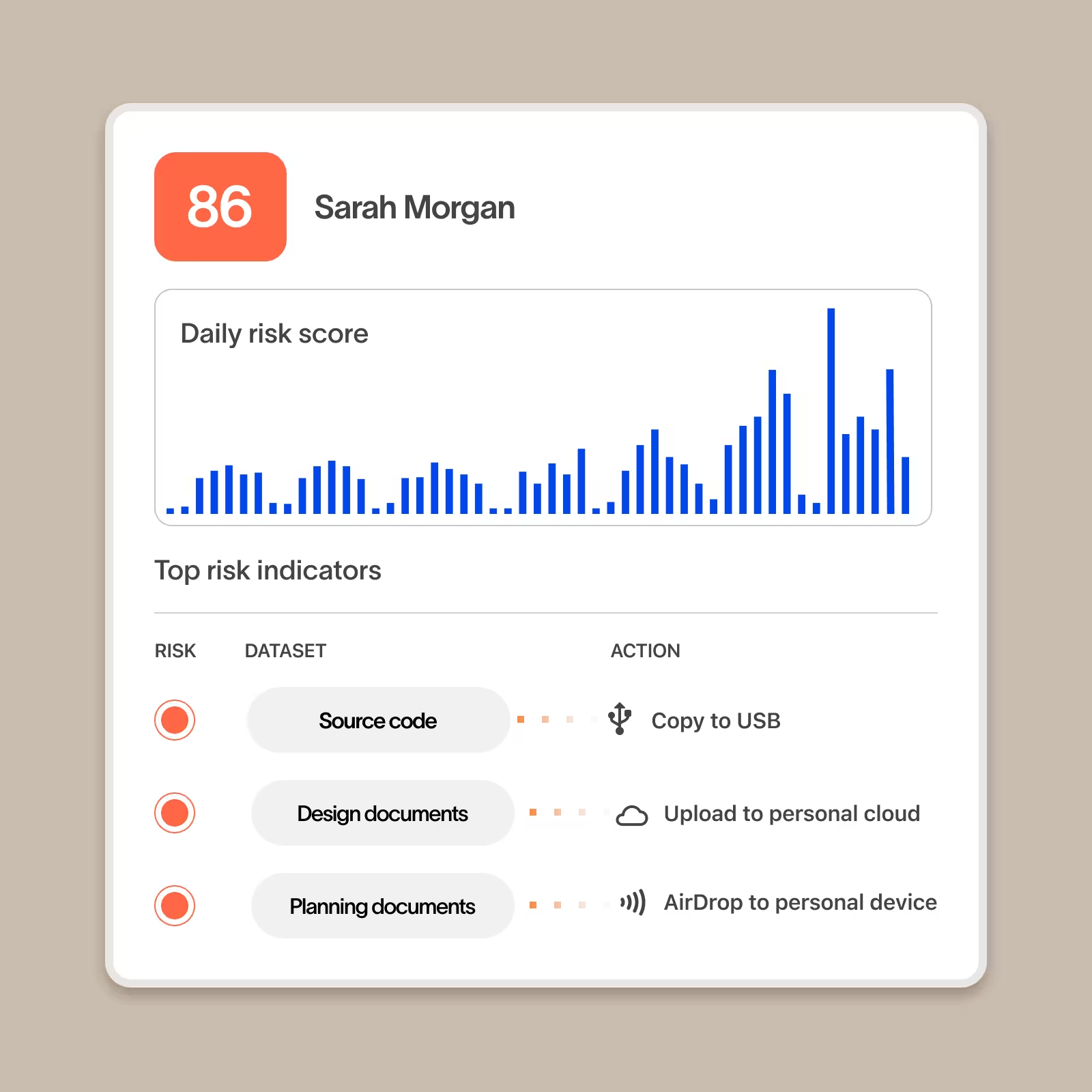
Detect risk at the intersection of behavior and data
Unusual behavior is only a risk signal when it involves data worth protecting. Cyberhaven evaluates user and agent actions in combination with what data was touched, where it originated, and how sensitive it is. An engineer uploading a compressed archive to an external site means one thing if the archive contains public documentation and another if it contains unreleased product IP. Cyberhaven knows the difference.
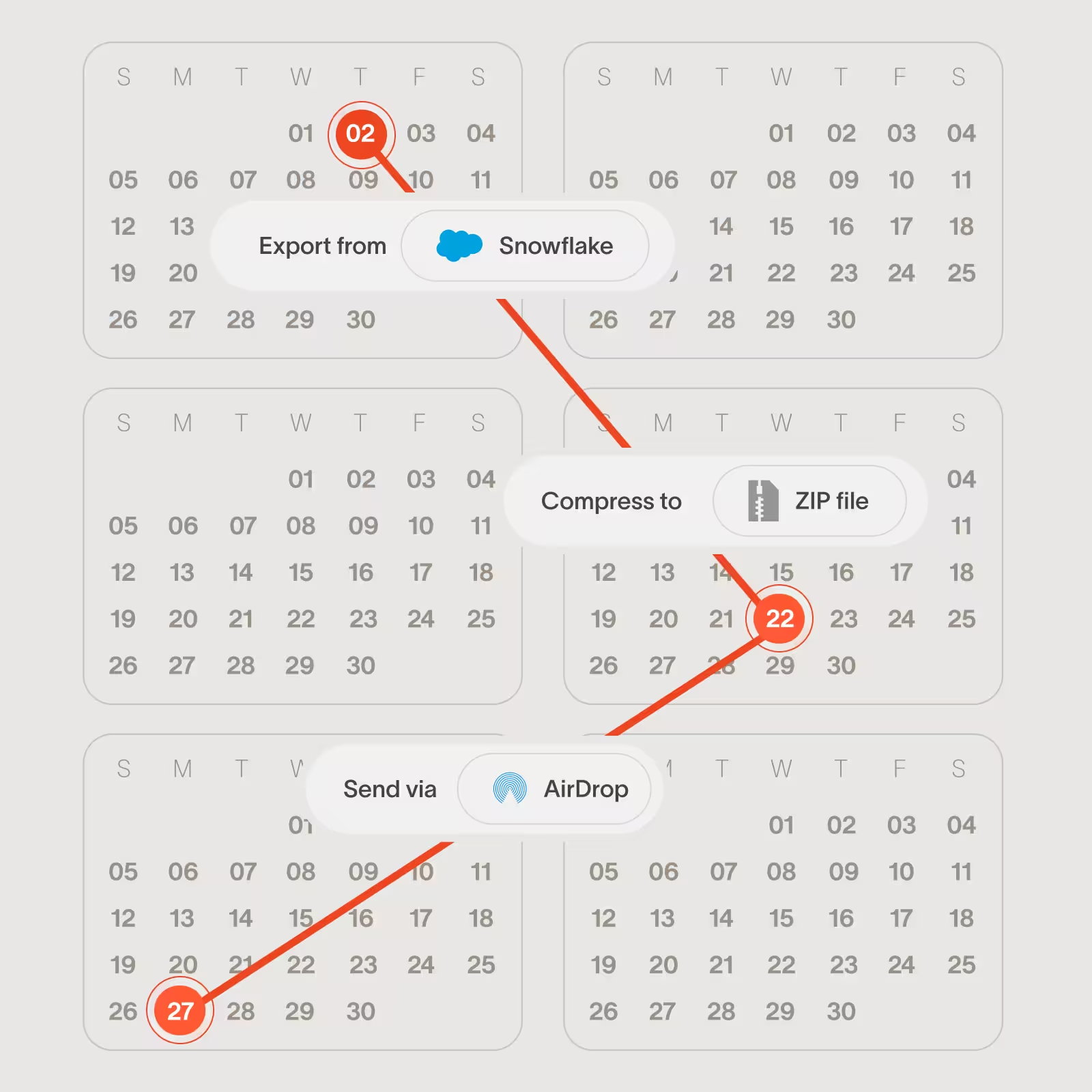
Surface slow-burning patterns before data leaves
Cyberhaven stores a complete behavioral and data movement record indefinitely, and correlates events across days, weeks, and months to surface the patterns that single-event monitoring misses. When an employee downloads files from Snowflake on day 2, compresses them on day 22, and exfiltrates via AirDrop on day 27, each step is connected in a single timeline. The cumulative risk score rises as the pattern emerges, enabling intervention before the final step.
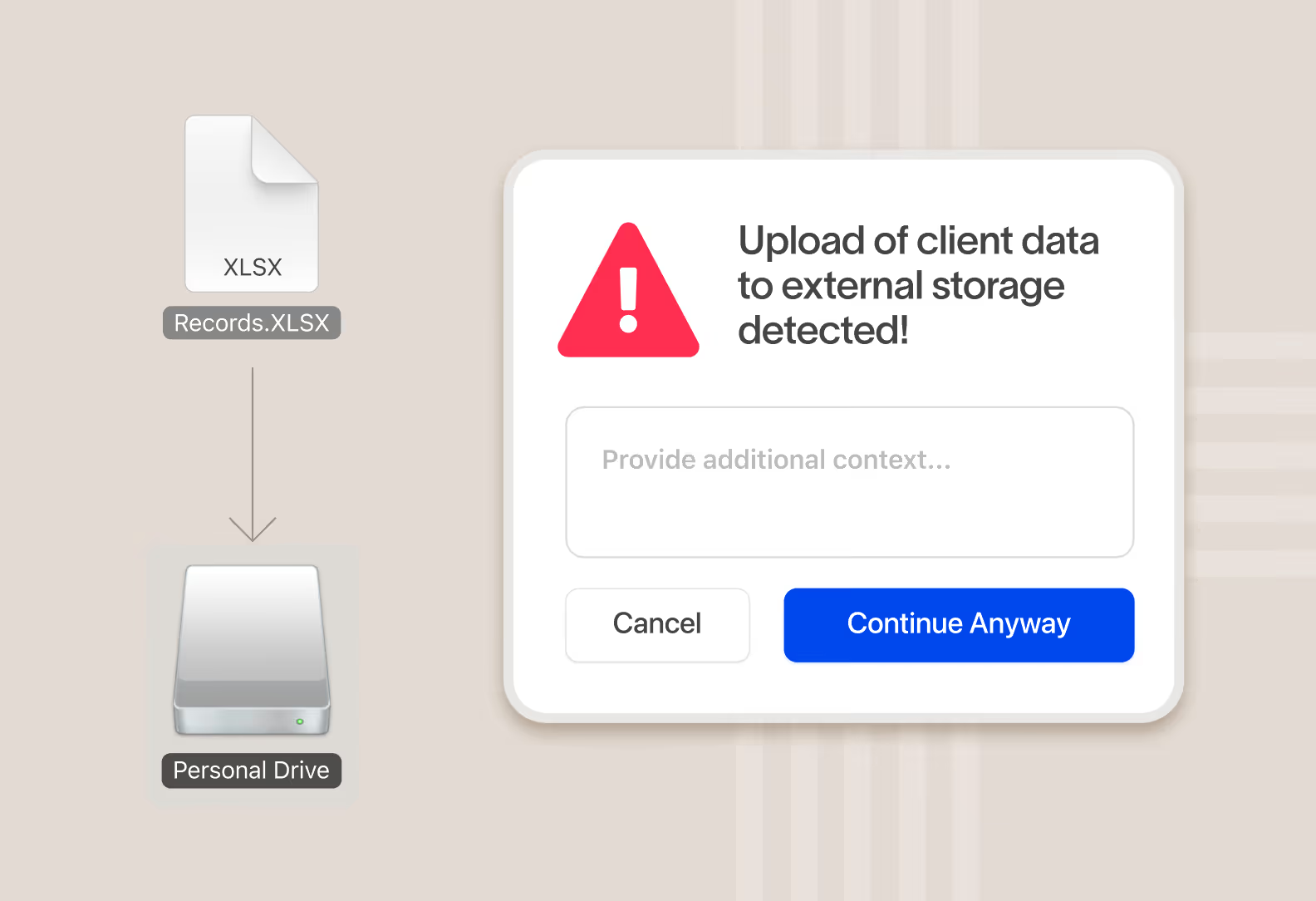
Enforce with precision: block, coach, or alert
Not every insider risk event warrants the same response. Cyberhaven supports a full range of enforcement options configured by data sensitivity, user risk profile, and policy context. High-sensitivity data moving to a personal account gets blocked with a plain-language explanation. Lower-risk behavior triggers a coaching notification that redirects the user without disrupting their work. Suspected incidents that need investigation get silently escalated to the security team.
.avif)
Catch the insider risk AI creates
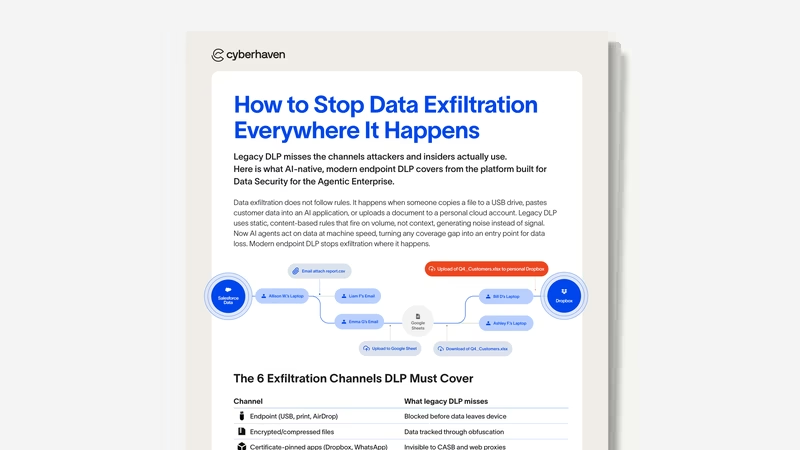
Agentic AI has become a major exfiltration channel in the enterprise, and the hardest to detect with traditional controls. When an employee or agent copies source code into a coding assistant, pastes financial projections into a chat interface, or submits customer records into a summarization tool, there is no file movement for a legacy tool to flag. Cyberhaven traces the data through the clipboard and browser interaction, connects it back to its origin and classification, and enforces policy at the point of submission.
Insider Risk in Action
Insider incidents rarely look like incidents while they're happening. Here's what Cyberhaven surfaces that other tools miss.
The insider risk management features security teams need to catch what behavior-only tools miss.
Behavioral and Data Risk Scoring
Scores users on the combination of actions taken and data sensitivity impacted, not behavior alone. Incorporates watchlist membership, user role context, and data lineage to separate real risk from noise.
Data Lineage for Insider Risk
Traces sensitive data from origin through every user interaction, so every behavioral signal carries the context to determine whether an incident occurred and what the blast radius is.
Slow-Burning Incident Detection
Correlates events across days, weeks, and months to surface the cumulative patterns that single-event monitoring never catches. Indefinite record retention means no investigation starts from scratch.
Elevated Response for Departing Employees
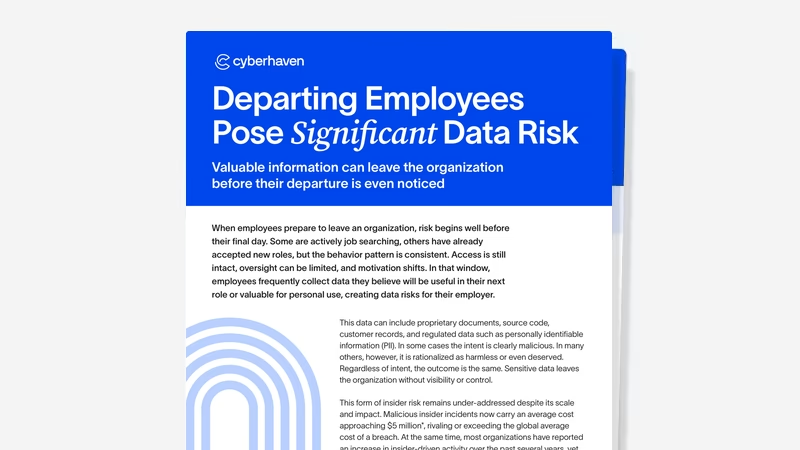
Dynamically steps up enforcement for employees in their notice period, integrating with HR systems to profile users based on departure date and apply block-without-override policies to sensitive data movement.
AI Insider Threat Detection
Tracks data through clipboard, browser, and AI tool submission events, connecting paste actions back to their source classification. Enforces policy at the point of AI interaction, not just at the network boundary.
Tiered Enforcement
Supports block, warn, coach, and silent alert responses configured by data sensitivity, user risk tier, and policy context. Proportionate responses reduce shadow behavior and employee friction without reducing protection.
IP Ingress Monitoring
Records the source of all data entering the organization, surfacing external-origin files brought in by new hires, contractors, and personal devices before they propagate into internal systems.
Data Security for the Agentic Enterprise
Cyberhaven Flow traces the full lifecycle of data and adapts protection to changing context
Frequently Asked Questions
What is insider risk management?
Insider risk management is the practice of identifying, monitoring, and responding to data security risks that originate from within an organization, including current employees, former employees, contractors, and other users with legitimate access. Unlike external threats, insider risk often involves authorized users taking actions with data they are permitted to access, making traditional perimeter controls ineffective. Effective insider risk management requires combining behavioral signals with data context to distinguish routine work from genuine threats.
What is the difference between an insider threat and insider risk?
An insider threat refers specifically to a malicious actor inside the organization: someone intentionally stealing data, sabotaging systems, or acting against the organization's interests. Insider risk is a broader category that includes unintentional incidents, such as an employee accidentally sharing sensitive data, using an unsanctioned AI tool, or falling for a phishing attack that exfiltrates data from within. Most insider incidents are unintentional. Insider risk management programs need to address both categories with proportionate, context-aware responses.
Why do behavior-only insider risk tools generate so many false positives?
Behavior-only tools flag anomalous user actions without knowing what data was involved or whether the action placed sensitive information at risk. A user who uploads a large volume of files may be moving public documentation or exfiltrating IP. Without content context, both look identical. The result is high alert volumes that exhaust analysts and erode trust in the program. Data context is required to distinguish signal from noise.
How has AI changed the insider threat landscape?
Generative and agentic AI tools have created a new insider risk vector that most existing programs cannot detect. Employees submit sensitive data to AI tools through copy-paste interactions that leave no file transfer event, no email trail, and no trigger for legacy DLP rules. Cyberhaven Labs research found that 39.7% of AI interactions involve sensitive data. Most of these incidents are unintentional, but the data exposure is real regardless of intent. Managing AI-driven insider risk requires endpoint-level visibility into clipboard and browser interactions, connected back to the origin and classification of the data involved.
How does Cyberhaven detect insider risk differently from UEBA tools?
User and entity behavior analytics (UEBA) tools model normal behavior patterns and flag deviations. They are user-centric: they tell you that a user acted unusually. Cyberhaven is data-centric: it tells you that a specific piece of sensitive data moved in a way that violates policy. The behavioral signal in Cyberhaven is always evaluated against data lineage context, showing what data was at risk, where it originated, and whether it left the environment. That combination is what makes enforcement possible, not just alerting.
What is a slow-burning insider incident and how does Cyberhaven detect it?
A slow-burning insider incident is one that unfolds across days, weeks, or months through a series of individually unremarkable actions: a user accessing files outside their normal scope, compressing them over several days, and exfiltrating them on the eve of their departure. No single event trips a policy rule. Cyberhaven stores a complete behavioral and data movement record indefinitely and correlates events across time to surface these cumulative patterns. Risk scores rise as the pattern develops, enabling intervention before the final exfiltration step.
.avif)
.avif)

Learn How to Secure the Agentic Enterprise
Our insights on protecting data across human and agent workflows, plus product news, event updates, and opportunities.