Stop Data From Leaving, Whatever Path It Takes
Data exfiltration now looks like a paste into an AI tool, a compressed archive renamed before upload, and a sync to a personal cloud account that your legacy DLP never sees. Cyberhaven traces the full lifecycle of your data and enforces policy across every channel from one platform.
Why Data Still Leaves Despite Your DLP Investment
Legacy data loss prevention (DLP) was built for a world where humans moved whole files through known channels. That world is gone.
Exfiltration Doesn't Need a Human Anymore
Legacy DLP was built around the idea that a human initiates every transfer. In the Agentic Enterprise, that assumption no longer holds. AI agents now read internal files, transform outputs, and route data to external endpoints as part of automated workflows, without a click, a file transfer event, or any signal DLP rules are built to catch. The exfiltration surface didn't just gain more channels; it gained a new class of actor that legacy tools were never built to see.
Data That Changes Shapes Escapes Content Inspection
When an employee or AI agent follows a modern workflow like renaming a file, compressing it into a ZIP, or pasting contents into a new document, traditional DLP rules are no longer able to recognize the file. That is the gap between a rule written against a file and a control applied to the workflow itself.
In the Agentic Enterprise, Every Task Is a Potential Exposure Event
When AI agents do the work, data isn't submitted by a human into a single AI tool. It is ingested as context, automatically, at scale, across every system the agent was granted access to. A single agent completing a routine workflow can pull source code, financial records, and customer data into its context window and pass that context to a model endpoint outside your perimeter. No file transfer. No browser event. No human decision point to enforce against.
How Cyberhaven Stops Data Exfiltration
One platform, one policy engine, every channel.

Exfiltration in Action
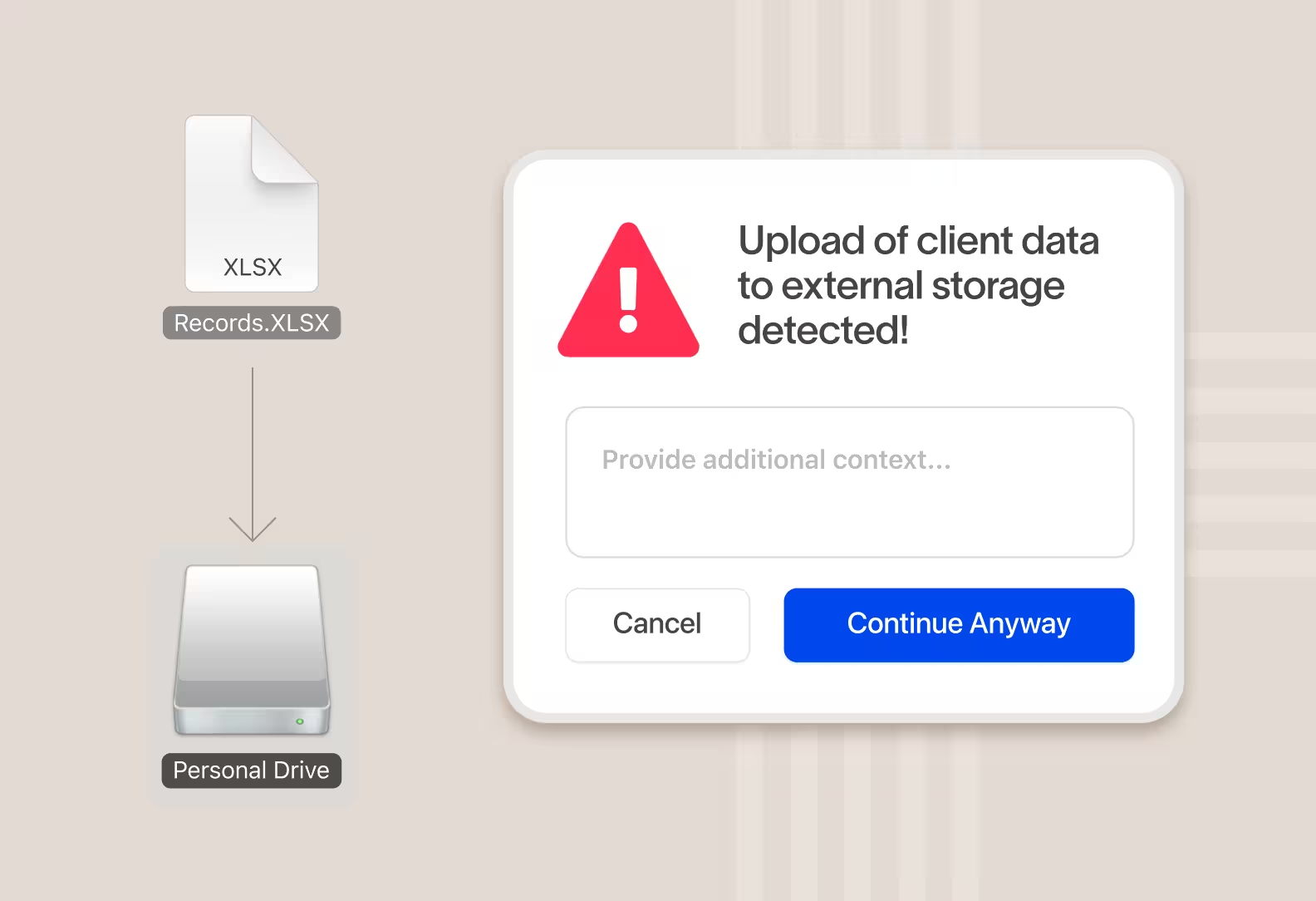
Exfiltration rarely announces itself. Here's what Cyberhaven stops that other tools miss.
Key Capabilities
Cross-Channel Coverage
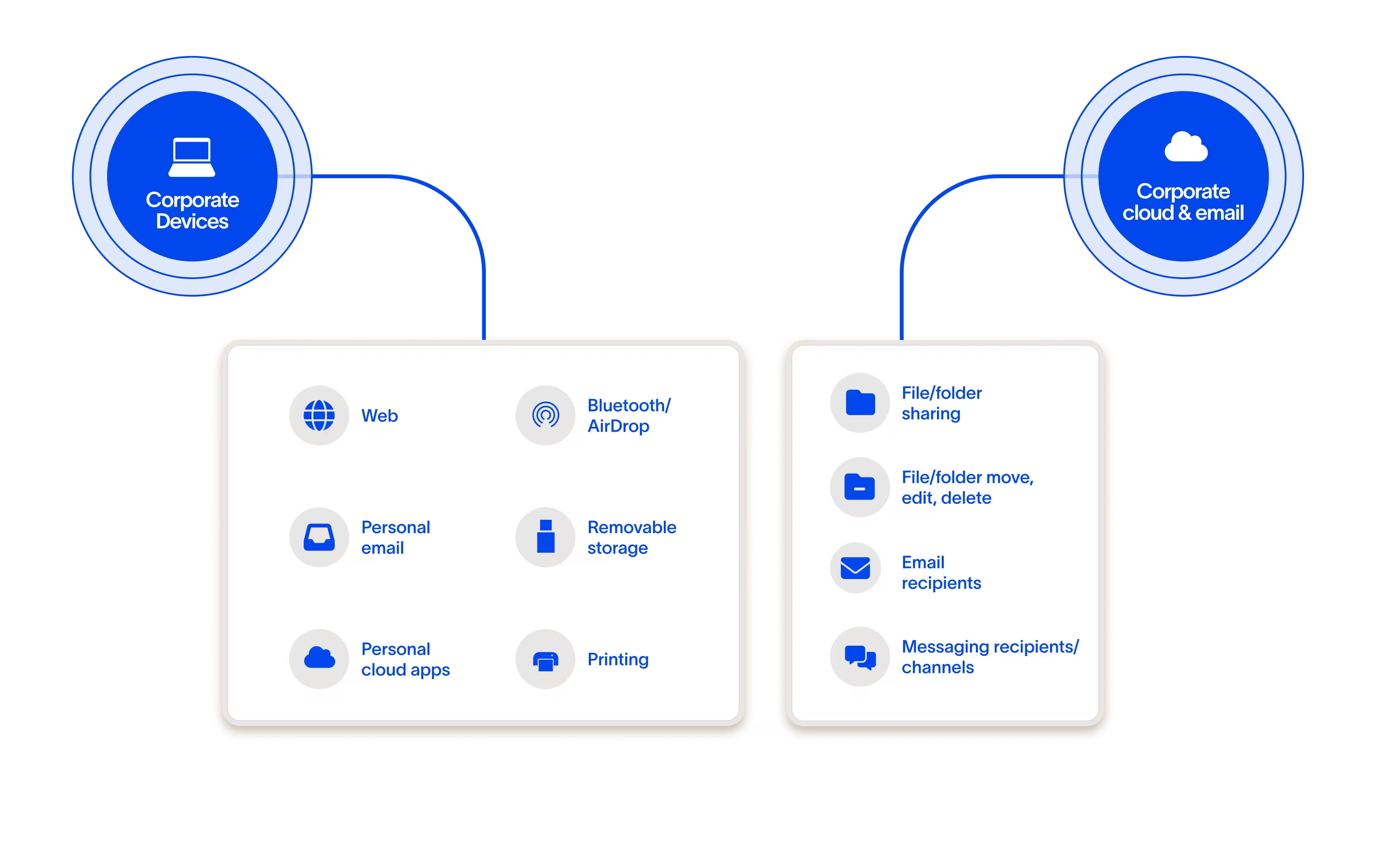
Enforces exfiltration controls across cloud, email, USB, AirDrop, print, AI tools, and AI agents from a single policy engine and console.
Transform-Aware Tracking
Follows data through copy-paste, rename, compression, and format conversion. Classification and policy enforcement persist regardless of how the data changes shape.
Obfuscation Detection
Surfaces rename, compress, and encrypt sequences as connected events in the incident record, so deliberate evasion is visible, not invisible.
Certificate-Pinned App Coverage
Enforces controls on apps like Dropbox and WhatsApp that bypass network-layer inspection entirely, by operating at the endpoint rather than the proxy.
AI Tool and Agent Enforcement
Tracks clipboard and browser interactions with AI tools and reconstructs AI agent workflows to enforce policy at the point of data submission, not just at the network boundary.
Lineage-Based Classification
Reduces false positives by roughly 90% by evaluating data in the context of where it originated and how it moved, not just what it looks like at the point of transfer.
Data Security for the Agentic Enterprise
Cyberhaven Flow traces the full lifecycle of data and adapts protection to changing context
Frequently Asked Questions
What is data exfiltration and how does it happen?
Data exfiltration is the unauthorized transfer of sensitive data outside an organization's control. It occurs through a range of channels: cloud storage uploads, email attachments, USB transfers, AirDrop, print, webmail, AI tool prompts, and AI agent outputs. Exfiltration can be intentional, such as a departing employee staging data before leaving, or unintentional, such as an employee pasting internal data into a personal AI tool to speed up a task.
Why does legacy DLP miss so many exfiltration attempts?
Legacy DLP was designed around file-level inspection and defined transfer channels. When data is copied into a new file, renamed, compressed, or pasted into a browser-based application, it often escapes the content patterns and destination rules the DLP was configured to catch. Certificate-pinned applications and AI tools bypass network-layer inspection entirely. The result is coverage that works for the channels it was built for and has significant gaps everywhere else.
How does data lineage improve exfiltration detection?
Data lineage tracks content from its origin through every copy, rename, transform, and transfer. When sensitive data is compressed into an archive or pasted into a new document, the lineage context travels with it. This means classification and policy enforcement remain active regardless of what the data looks like at the point of transfer, eliminating the evasion gap that renames and obfuscation create for content-inspection-only tools.
Can Cyberhaven block AI tool exfiltration?
Yes. Cyberhaven tracks data through clipboard events and browser interactions at the endpoint level, connecting paste actions back to the source file and its classification. When an employee pastes sensitive content into an AI tool, Cyberhaven can block, warn, or log the action based on the data's origin, classification, and the risk profile of the destination tool, without requiring a file transfer event to trigger enforcement.
Does Cyberhaven require a separate product for each exfiltration channel?
No. Cyberhaven enforces exfiltration controls across all channels, cloud, email, USB, AirDrop, print, webmail, AI tools, AI agents, and certificate-pinned applications, from a single platform with a unified policy engine. Existing customers who use Cyberhaven for DLP, IRM, or AI Security do not need a separate agent or policy console to add cross-channel exfiltration coverage.
.avif)
.avif)

Learn How to Secure the Agentic Enterprise
Our insights on protecting data across human and agent workflows, plus product news, event updates, and opportunities.