Modern Data Security Should Be Anchored To Your Data’s Lineage

September 23, 2026
•
1 min
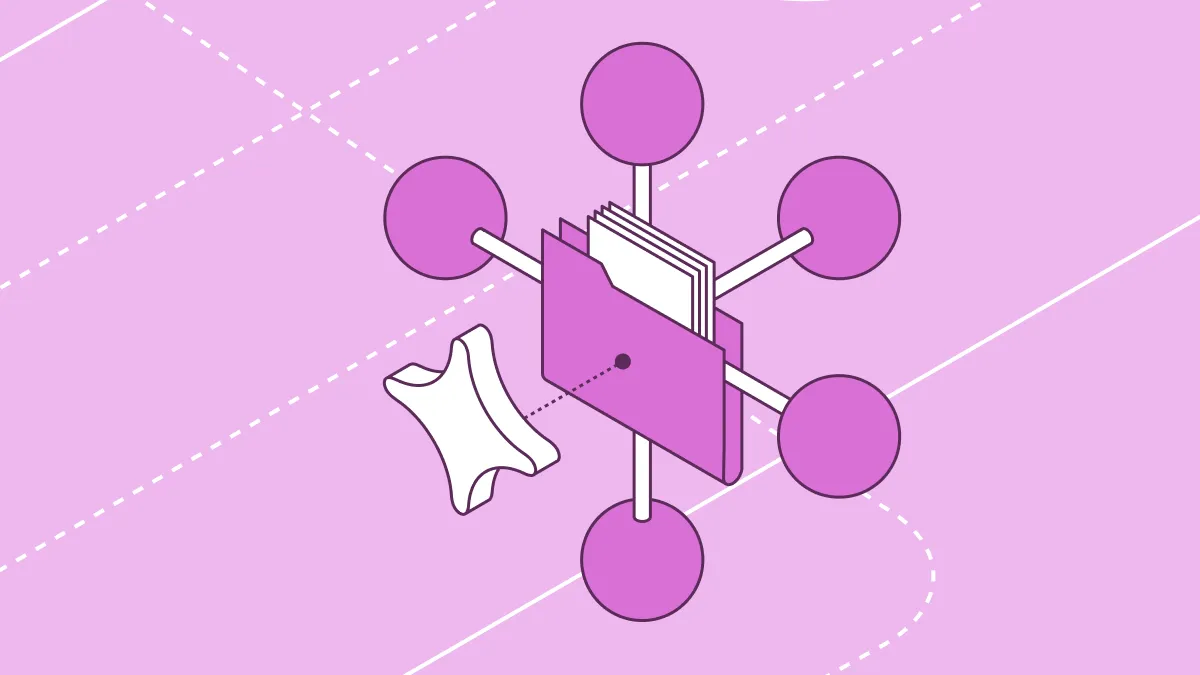
New AI tools appear every day. The novelty and utility they bring, along with the constant pressure to be more productive, pull employees toward them to get work done faster.
The intent is good but the effect can range from problematic to damaging, because while there are rules in place for sanctioned tools, there are none for the ones that quietly show up in between. Tools are arriving faster than the process meant to govern them, and by the time one surfaces in a review, it has likely already touched real data.
But new AI tools are only half of what is being changed. The other half happens to the data itself. These tools don’t just read the data, they reshape it. They summarize a document, rewrite a block of code, or fold several sources into one answer. The output carries the same sensitive material as the input, but it no longer looks like it, and it sits one more step away from anything you originally identified.
So the problem is not simply more tools to watch. It is more sensitive data, in more places, in more forms than you can see, multiplying at machine speed. Every derivative that no policy recognizes means more sensitive data moving without protection, and that exposure grows faster than any team can handle.
The first instinct may be to read this as a resourcing problem. If the team were bigger or faster, policy would keep pace, but that notion is flawed. The vast majority of teams are highly capable and efficient, but that efficiency works at human speed and not machine speed.
The Assumption Underneath Every Policy
When creating data protection policies, what do those policies typically anchor to? For your team, when they write a policy, they would normally attach protection to something they can point at. A few candidates come to mind:
- The first is the “container,” meaning the tool or location the data lives in or moves through. A rule for the sanctioned file share, a rule for corporate email, a block on a specific external site.
- The second is the “description,” meaning what the data looks like. A pattern that matches a card number, a label that says confidential, a fingerprint of a known sensitive file.
Both policies work the same way underneath. Both assume you can enumerate the world in advance, that you can list the containers worth watching and describe the data worth protecting before anything happens.
Up until now, the argument could be made that these assumptions held up well enough to build a good data security program, and they still do a lot of work. Both were built for a world that changed at human speed. New tools arrived a few at a time, slow enough to review and add to the list. Sensitive data generally kept its shape, so a pattern or a label written once kept working long after it was written. These approaches were matched to the conditions of that time. But with how fast AI interacts with, transforms, and creates new data, neither one holds up on its own anymore.
Old Anchors Can't Keep Up With New Tools
The “Container” Anchor: Too Many to Track
Anchoring to the destination means maintaining a list. Every sanctioned app, every category of site, every known tool gets a rule, and the protection is only as current as the list. This method was already under strain before AI. Shadow IT and SaaS sprawl spent the last decade proving that employees adopt tools faster than security can catalog them. AI has made this problem significantly more difficult to solve with traditional approaches.
In 2025, Cyberhaven Labs found that endpoint-based AI agents grew 509% in a single year. Note that these are not browser tabs a proxy can watch. They run at the operating system (OS) level, and they do not announce themselves the way a new SaaS login does. Additionally, Cyberhaven Labs also found that 39.7% of the data employees put into AI tools is sensitive.
The list is falling further behind at the exact moment the data crossing into unlisted tools is at its most sensitive.
Keeping that list current still matters, and you should keep doing it. What has changed is that the list alone can no longer keep up. The cost of that delay is not administrative overhead, it is exposure. When a spreadsheet of customer records is pasted into an AI tool nobody has listed yet, the data is out and unprotected in real time, because the policy that would have caught it was written for the tools you already knew about. A bigger catalog helps. It does not close the gap on its own.
The Description Anchor: It Can't See Transformed Data
Anchoring to a description means protection recognizes data it was already taught to recognize like the pattern, the keyword, the fingerprint of the original file. This still catches a great deal, and it is still worth keeping. But AI strains it in a way shadow IT never did, because AI does not just move data, it transforms it and fragments it.
Imagine that an employee drops a sensitive contract into an AI assistant and asks for a plain-language summary. The summary carries the same terms, obligations, and figures that made the contract sensitive, but it shares almost none of the original wording, so a rule watching for the original text has little to match. The employee pastes that summary into a message and sends it along. The sensitive material is still moving, but a description written for the source file would struggle to recognize it in its new form. By then the terms of that contract are sitting in a channel your controls read as clean.
This is a different challenge than a static classifier misreading a file, and the mechanics of why classification alone cannot keep up are the subject of a separate piece on the shift from rules to adaptive protection. What matters here is narrower. The description anchor strains for the same underlying reason the container anchor does. Both are fixed to a snapshot, one of where the data was and one of what it looked like, and AI makes sure the data does not stay in either state for long.
Why Both Anchors Lose the Context and the Data
Put the two next to each other and the pattern is clear:
- The container anchor loses the data when it moves to a place you did not list.
- The description anchor loses the data when it changes into a form you did not describe.
In both cases the signal stayed put and the data moved on, out of sight and still sensitive.
So the question is not whether to keep the list and the descriptions. You still need both, and they still do real work. The question is what to add so they hold when the data moves and changes.
The answer is that you need to also anchor protection to the data's history, its lineage, and not just those two signals alone.
You can’t rely just on location, which changes. Not just the description, which can be transformed. You need to understand the whole history, the whole lifecycle of the data to protect it.
Data Lineage Is the Anchor That Travels
Data lineage is the record of where a piece of data came from and everything that has touched it since. It is the third anchor for data protection, standing alongside where the data sits and what it looks like.
In practical terms, it is the data’s lifecycle made available for security teams. Lineage records a file's origin and every step it takes, so protection can key off where the data came from, not only where it currently sits or what it currently looks like.
Now with data lineage, when sensitive content is copied out of a known source and into an AI tool, sanctioned or not, lineage ties that movement back to where the data came from, because lineage watches the action at the point of use, not the name of the tool the data is heading into. This context is what catches the data the moment it crosses into an AI assistant. And because lineage recognizes data by its origin rather than its appearance, a copy that has been renamed, reformatted, or trimmed still stays tied to its source even when a description written for the original misses it.
This is the approach Cyberhaven built its platform around, and it is why lineage keeps surfacing as the common thread whenever destination lists and content descriptions reach their limits.
Protect Data Better by Knowing Its Lineage
For years, data protection has relied on two questions: where does the data live, and what does it look like? Both still matter, and you should keep asking them.
What has changed is that neither one holds long enough to carry protection on its own anymore, especially now with rapid adoption of AI and other agentic tools. So the two questions need a third alongside them, one that does not depend on the data staying in place or keeping its shape: where did this data come from, and what has happened to it since? That history, its lineage, is the thing a piece of data carries with it everywhere it goes. Organizations that add it are better equipped for the AI era.
.avif)
.avif)

Insights for the agentic enterprise
New guides, reports, and insights on data security, sent as they publish.