AI Trust Starts With Knowing the Source

October 13, 2026
•
1 min
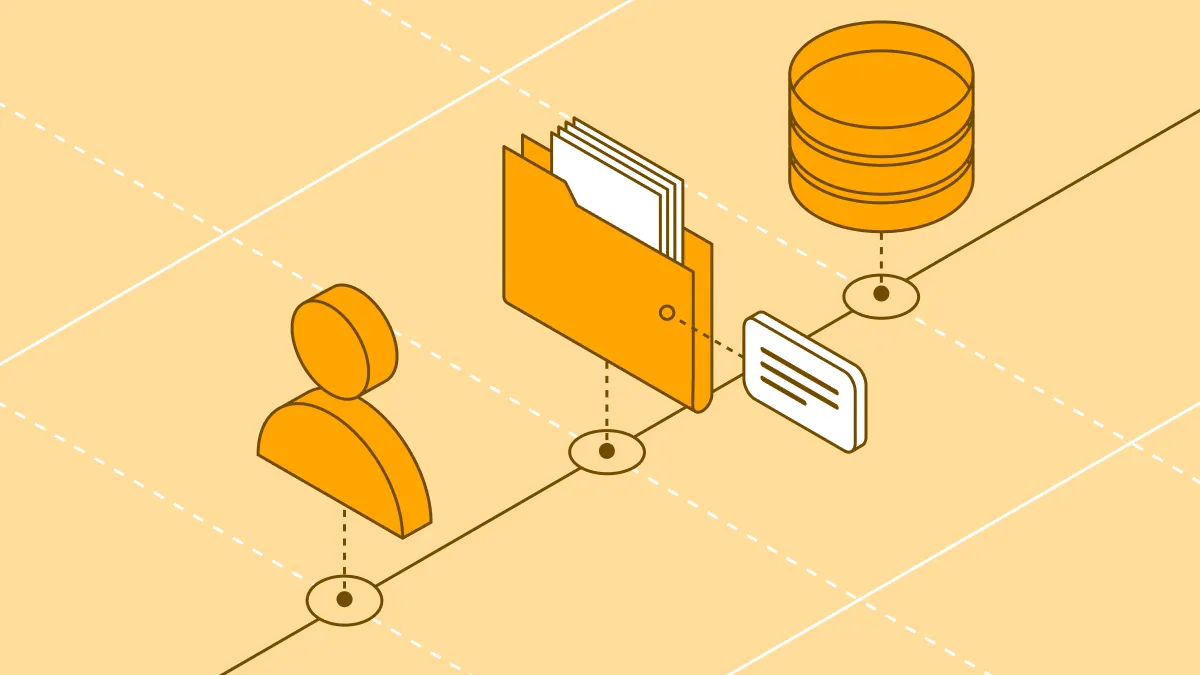
An AI agent produces a recommendation that looks reasonable. It's accurate. The model didn't hallucinate. Can the organization trust it?
That depends on questions the output can't answer:
- What data influenced the result, and where did it originate?
- Was the user or agent authorized to access it?
- What happened to the data before it reached the model?
- Which systems, tools, or agents contributed?
- Can anyone reconstruct why the AI produced this answer?
Enterprise trust requires knowing where information came from, how it moved, what happened to it, and whether the process behind the result deserves confidence. Provenance is where that trust starts.
AI Trust Is Bigger Than Model Accuracy
The AI risk conversation has centered on hallucinations and model reliability. Those matter, but accuracy alone doesn't settle whether a result can be trusted. Correctness and trustworthiness are different properties.
A correct output can still create risk when it:
- Relied on data the user shouldn't have accessed
- Incorporated outdated or improperly sourced information
- Pulled from an unapproved system
- Drew on sensitive data and was then shared externally
- Came from an agent that reached beyond its intended scope
The stakes rise as AI moves from answering questions to taking action. A chatbot that writes a summary presents one trust problem. An agent that retrieves data, updates a system, sends an email, or triggers a workflow presents another.
The more autonomy AI has, the more provenance matters.
Provenance Answers the Questions Accuracy Can't
Data provenance is the verifiable record of where data originated, who created or owned it, and the context in which it was created. For AI, provenance connects an output back to the sources that shaped it, so teams can judge whether those sources were appropriate. It gives trust a starting point.
Where Did the Data Come From?
Provenance identifies the original source, owner, system, or repository. Every later judgment about the data depends on getting this right.
Was the Data Appropriate to Use?
Origin has to connect to permissions and context. An AI system may have been technically able to retrieve a document. Whether it should have used that document is a separate question, and only provenance paired with access context can answer it.
What Happened to the Data Along the Way?
This is where provenance ends and data lineage begins. Data rarely moves straight from source to model.
Source → export → transformation → application → AI model → output → downstream workflow
Each hop can change the context around the information.
Why Point-in-Time Inspection Falls Short
Many tools judge the risk of data by scanning its content at a single moment. Legacy DLP works this way. It reads what a file contains right now and infers whether it's sensitive.
That's like interviewing a stranger to decide whether they're trustworthy. The interview tells you how they present today. It can't tell you what they've done.
Provenance works like a background check. It reveals the history behind the person: where they've been, what they've done, and who can vouch for them. For data, that history covers where it originated, who handled it, and what happened along the way. A file that looks harmless in a scan can carry a history that changes how it should be treated.
Lineage Creates Trust Across the AI Workflow
Provenance establishes the starting point. Data lineage keeps that trust useful over time by recording the copies, edits, transfers, and transformations that happen after data enters a workflow.
That means provenance can't be a label attached to a dataset. It has to follow information through the AI workflow:
Data origin → Data access → Data transformation → AI interaction → AI output → Human or agent action
At each stage, a trustworthy process can answer a short set of questions:
- What data entered, and who or what accessed it?
- Which permissions applied?
- What transformations occurred?
- Which model or agent processed it?
- What output resulted, and where did it go next?
A gap at any stage breaks the chain.
The Trust Problem Gets Bigger With Agentic AI
Traditional AI interaction is simple:
Human → prompt → model → response
Agentic workflows are much more complex:
Human → agent → tools → data sources → other agents → actions → systems → output
An agent may retrieve information from several systems, transform it, combine it with other data, and act on the result. The question shifts from "Is this answer accurate?" to "Can we trust everything that happened to produce this answer and action?"
Human Operations Need Lineage
People need to know what information influenced a decision, where it came from, whether it was authorized, and whether the decision can be reconstructed.
Agent Operations Need Provenance
Agents need the same accountability at machine speed. When an agent acts, organizations need to know:
- Which data it accessed
- Which permissions it used
- Which tools it invoked
- What it changed or transmitted
- What happened afterward
Agentic AI raises the value of data lineage because autonomous systems create chains of activity too complex to reconstruct by hand.
Data Lineage Is What Makes AI Auditable
Trust also becomes a governance question. Executives, security teams, auditors, regulators, customers, and legal teams will all want answers. Increasingly, the question they ask will be "Show me how this result was produced."
The National Institute of Standards and Technology (NIST) Generative AI Profile (AI 600-1, 2024) calls for documenting and tracking information about data sources and provenance as part of managing AI risk.
Documentation at the source helps. Enterprise AI also needs provenance that stays meaningful as information moves through systems, models, applications, and agents. Holding lineage information at one point in time and maintaining provenance across the full lifecycle are different capabilities.
From AI Trust to Data Trust
AI doesn't create trust on its own. Trust comes from understanding the data and decisions around it, because a system can only be as trustworthy as the information and workflows behind its outputs.
Five elements make that understanding work:
- Provenance establishes origin
- Permissions establish whether access was appropriate
- Lineage shows what happened to data over time
- Context explains how data was used
- Auditability makes the process defensible
This is the thinking behind Data Security for the Agentic Enterprise. Cyberhaven traces the full lifecycle of your data, adapting protection to changing context. Data Lineage anchors security to where data originated and how it moved, which gives protection context that application controls and content inspection alone can't provide.
The future of AI security depends on understanding the data that flows through generative and agentic AI and tracing what happens to it, beyond controlling which models people use.
You Can't Trust What You Can't Trace
Return to the opening example. The output may be accurate, and the model may behave exactly as designed. Without provenance, the organization still can't answer the fundamental question: why should we trust this result?
As AI grows more autonomous and more embedded in business workflows, provenance becomes a prerequisite for trust. Organizations that trace data from origin through transformation, AI interaction, and downstream action can make AI more accountable without slowing it down.
The goal is to make uncertainty visible enough to manage.
See how Cyberhaven traces data from origin through every interaction, transformation, and movement to give security teams the context they need to secure AI.

.avif)
.avif)

Insights for the agentic enterprise
New guides, reports, and insights on data security, sent as they publish.