- Cloud security posture management (CSPM) automates the detection and remediation of cloud misconfigurations across multiple cloud platforms.
- Most CSPM tools connect through cloud provider APIs, which gives security teams continuous visibility without installing agents on every workload.
- Organizations use CSPM to apply consistent policy across multi-cloud environments and to produce audit-ready compliance evidence.
- CSPM secures the configuration of cloud infrastructure, while data security posture management (DSPM) secures the sensitive data stored inside it.
- Mature programs add data context to CSPM findings so teams can prioritize misconfigurations by the sensitivity of the data they expose.
What Is Cloud Security Posture Management (CSPM)?
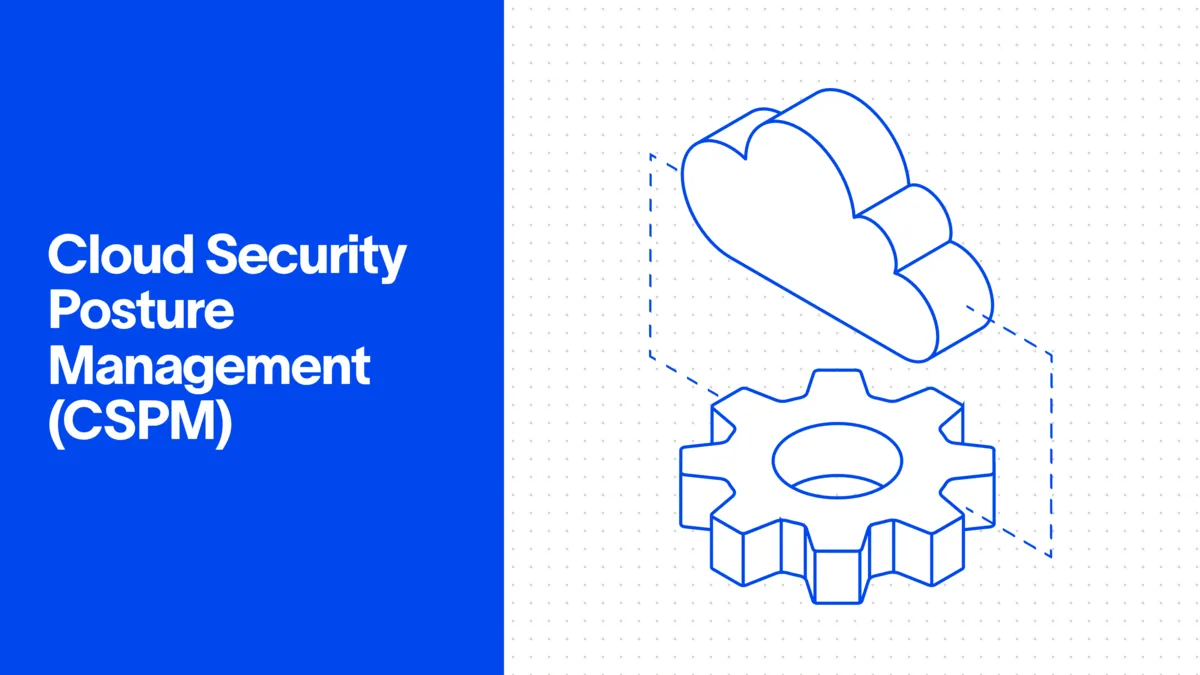
Cloud security posture management (CSPM) is a category of security tooling that continuously monitors cloud infrastructure configurations, detects misconfigurations and compliance violations, and guides or automates remediation. CSPM tools connect to cloud provider APIs to inspect resources across public and multi-cloud environments. Security teams use CSPM to reduce breach risk and demonstrate compliance.
CSPM grew out of earlier cloud infrastructure security posture assessment (CISPA) tools, which reported misconfigurations but left remediation to people. Modern CSPM tools automate detection, prioritization, and fixes, and many vendors now package them inside cloud-native application protection platforms (CNAPP).
The practice exists because of the shared responsibility model. Cloud providers secure the underlying infrastructure, and customers remain responsible for how they configure storage, networking, identities, and services. A single cloud misconfiguration, such as a publicly readable storage bucket, can expose data to the internet.
CSPM is one discipline within broader cloud security. It addresses infrastructure risk, while data security posture management (DSPM) addresses the sensitive data inside that infrastructure.
How CSPM Works
Cloud security posture management works by connecting to cloud accounts, building an inventory of resources, and continuously comparing configurations against security policies. The process follows six stages:
- Connect to cloud accounts: CSPM tools authenticate to Amazon Web Services (AWS), Microsoft Azure, and Google Cloud Platform (GCP) through provider APIs. Teams usually start with read-only permissions for visibility and add limited write permissions only when they enable automated remediation.
- Discover and inventory assets: The tool catalogs compute instances, storage, databases, networks, identity settings, and serverless functions. It also records configuration changes over time to create an audit trail.
- Assess configurations against policy: Built-in checks compare each resource to benchmarks such as the Center for Internet Security (CIS) benchmarks, National Institute of Standards and Technology (NIST) guidance, and regulatory frameworks including Payment Card Industry Data Security Standard (PCI DSS) and Health Insurance Portability and Accountability Act (HIPAA). Typical findings include publicly accessible storage buckets, unencrypted databases, overly permissive identity roles, and open network ports.
- Prioritize by risk: Enterprises often accumulate thousands of misconfigurations, so modern tools correlate findings with internet exposure, vulnerabilities, and excessive permissions to surface the combinations that form real attack paths.
- Remediate: CSPM tools provide step-by-step fix guidance, open tickets, and send alerts to security information and event management (SIEM) platforms or collaboration tools. Some tools apply fixes automatically for defined low-risk issues.
- Monitor and report: Continuous monitoring detects configuration drift, the gradual divergence of live resources from approved baselines. The tool also generates compliance reports that map findings to each framework control.
Because CSPM depends on API telemetry, it can begin monitoring an environment shortly after setup. Older tools collected periodic snapshots, while current tools update in near real time.
CSPM vs. CNAPP, CWPP, CASB, CIEM, and DSPM
The key difference between CSPM and related cloud security categories is scope. CSPM focuses on the configuration of cloud infrastructure, and each neighboring category covers a different layer of cloud risk. The table below compares the categories security teams most often evaluate alongside CSPM.
| Category | Primary focus | Relationship to CSPM |
|---|---|---|
| Cloud workload protection platform (CWPP) | Runtime protection and vulnerability management for hosts, containers, and serverless functions | Protects the workloads that run on infrastructure CSPM configures. |
| Cloud access security broker (CASB) | User access and data activity in cloud and SaaS applications | Governs user-to-application activity, while CSPM governs infrastructure configuration. |
| Cloud infrastructure entitlement management (CIEM) | Identity permissions and entitlements across cloud accounts | Adds deep access governance that CSPM covers only at the configuration level. |
| Cloud-native application protection platform (CNAPP) | Integrated platform that combines CSPM, CWPP, and other cloud security capabilities | Includes CSPM as one module. |
| Data security posture management (DSPM) | Discovery, classification, and protection of sensitive data | Secures the data inside the infrastructure that CSPM monitors. |
CASB capabilities often arrive as part of secure access service edge (SASE), which combines network and security services for users who connect to applications from anywhere.
CSPM and DSPM address different layers of the same environment. CSPM answers whether cloud infrastructure is configured securely, and DSPM answers where sensitive data lives, who can access it, and whether it is protected. A detailed comparison of DSPM and CSPM shows that most mature programs deploy both, because infrastructure posture and data posture fail in different ways.
Benefits of Cloud Security Posture Management
The benefits of cloud security posture management center on reducing misconfiguration risk, which remains a common cause of cloud exposure. According to the IBM Cost of a Data Breach Report, cloud misconfigurations accounted for 15% of breaches. CSPM shortens the time between a risky change and its detection, which narrows the window attackers can use.
Organizations that deploy CSPM gain five core benefits:
- Continuous visibility into cloud assets, configurations, and change history across every provider in the environment
- Faster risk reduction through prioritized findings and guided or automated remediation
- Consistent policy enforcement across AWS, Azure, and GCP from a single console
- Audit-ready compliance reporting that maps configurations to frameworks such as SOC 2, PCI DSS, and HIPAA
- Stronger collaboration with DevOps teams, because findings arrive with context and fix instructions developers can act on
CSPM Use Cases for Multi-Cloud Environments
CSPM use cases for multi-cloud environments share one driver. Each cloud provider uses its own services, naming, and defaults, and security teams cannot manage that variation manually at scale.
Consistent Policy Across Providers
Amazon S3, Azure Blob Storage, and Google Cloud Storage all hold object data, yet each exposes different access settings. CSPM normalizes configurations from every provider into one policy set, so a rule such as “block public access to object storage” applies the same way everywhere.
Continuous Compliance Evidence
Regulated organizations use CSPM to map cloud configurations to frameworks such as SOC 2, PCI DSS, HIPAA, and the General Data Protection Regulation (GDPR). The tool then generates reports for auditors without manual evidence collection. These reports show the state of infrastructure controls, and programs that cover data handling also need visibility into where regulated data lives.
Drift Detection in Infrastructure as Code Pipelines
Teams that provision resources through infrastructure as code (IaC) and continuous integration and continuous delivery (CI/CD) pipelines can repeat a single misconfiguration across hundreds of resources. CSPM detects configuration drift after deployment, and many tools integrate with DevOps workflows to flag insecure templates before release.
Limiting Exposure From Permissive Access and Open Networks
CSPM flags overly permissive identity policies, open network ports, and publicly exposed services across every connected account. Remediating these findings supports a zero trust posture, in which no user, service, or network location receives implicit trust.
Common CSPM Challenges and Limitations
Organizations that deploy CSPM tools encounter five recurring challenges:
- A data-layer blind spot: CSPM confirms that a storage service is configured correctly, and it does not identify what data the service holds or who has queried it. According to the IBM Cost of a Data Breach Report 2025, customer personally identifiable information (PII) was compromised in 53% of breaches analyzed, and that exposure occurs at the data layer.
- Alert volume: Enterprises can accumulate thousands of misconfigurations, and tools without risk context flood security and DevOps teams with low-priority findings.
- Uneven coverage beyond infrastructure: Most CSPM tools focus on cloud provider infrastructure and configuration settings, and coverage of SaaS applications and AI tools, both generative and agentic, varies by tool.
- Remediation ownership: Findings usually belong to engineering teams, so unclear ownership slows fixes, and unreviewed automated remediation can disrupt production workloads.
- Permission scope: API access requires careful permission design, since broad write access to production accounts expands the blast radius of the CSPM tool itself.
How to Implement CSPM
Implementing cloud security posture management works best as a phased program. Security teams typically follow six steps:
- Inventory every cloud account, subscription, and project, including accounts created outside central IT.
- Select the frameworks and internal standards that define a secure configuration, such as CIS benchmarks and SOC 2 controls.
- Connect the CSPM tool with read-only access first, then add limited write permissions for approved automated fixes.
- Prioritize findings by internet exposure, permissions, and the sensitivity of the data at risk.
- Route remediation to the teams that own each resource, and automate fixes for low-risk, well-understood issues.
- Review policies on a regular schedule, because cloud services, threats, and compliance requirements change.
What to Look for in CSPM Tools
Buyers comparing cloud security posture management tools and CSPM platforms should evaluate six criteria:
- Coverage of every cloud provider and service in use
- Near-real-time configuration updates
- API-based, agentless connectivity with least-privilege permissions
- Built-in policies mapped to the frameworks auditors use
- Risk context that links misconfigurations to vulnerabilities, permissions, and data sensitivity
- Integrations with SIEM, ticketing, and developer tools
How Cyberhaven Addresses Cloud Posture and Data Risk
Cyberhaven addresses cloud data risk through a unified data security platform that combines DSPM, Data Lineage, and AI Security to show what sensitive data lives in cloud environments and how it moves. CSPM confirms that cloud infrastructure meets configuration policy. Cyberhaven DSPM adds the data context that tells security teams whether a misconfiguration exposes regulated records or an empty test bucket.
DSPM discovers and classifies sensitive data across infrastructure as a service (IaaS), platform as a service (PaaS), and software as a service (SaaS) environments, including shadow data stores that security teams may not know exist. Data Lineage traces each piece of data from its origin through every copy, move, and transformation. Cyberhaven traces the full lifecycle of your data, adapting protection to changing context.
AI Security extends that visibility to data entering AI tools, both generative and agentic, which sit outside the scope of infrastructure posture checks. Together, these capabilities let teams rank CSPM findings by the sensitivity of the data at risk.
Frequently Asked Questions
What does CSPM stand for?
CSPM stands for cloud security posture management. It is a category of security tooling that monitors cloud infrastructure configurations, detects misconfigurations and compliance violations, and guides or automates remediation across public and multi-cloud environments.
What is CSPM in cyber security?
In cyber security, CSPM is the practice and tooling used to manage the security posture of cloud infrastructure. It addresses configuration risk, including publicly exposed storage, overly permissive access policies, and unencrypted resources, and it supports compliance with frameworks such as CIS, NIST, and PCI DSS.
What is the difference between CSPM and CNAPP?
CSPM identifies and fixes misconfigurations in cloud infrastructure. A cloud-native application protection platform (CNAPP) combines CSPM with additional capabilities, such as cloud workload protection and cloud infrastructure entitlement management, to secure cloud-native applications across development and production.
What is the difference between CSPM and DSPM?
The key difference between CSPM and DSPM is scope. CSPM secures cloud infrastructure by monitoring configurations and policy compliance, while DSPM secures the sensitive data inside that infrastructure by discovering, classifying, and monitoring it. Most mature programs use both.
Does CSPM work in multi-cloud environments?
Yes. Most CSPM tools support AWS, Azure, and GCP, and some also cover providers such as Oracle Cloud, Alibaba Cloud, and IBM Cloud. They normalize configurations from each provider into one policy set and one console, which helps security teams enforce consistent standards across clouds.
What risks does CSPM protect against?
CSPM protects against configuration-driven risks, including publicly accessible storage, open network ports, excessive identity permissions, unencrypted resources, and configuration drift. These risks can lead to data exposure and compliance violations. Visibility into the sensitive data stored in those resources comes from DSPM.